
Homemade All Purpose Cleaner

This post may contain affiliate links. · As an Amazon Associate I earn from qualifying purchases.
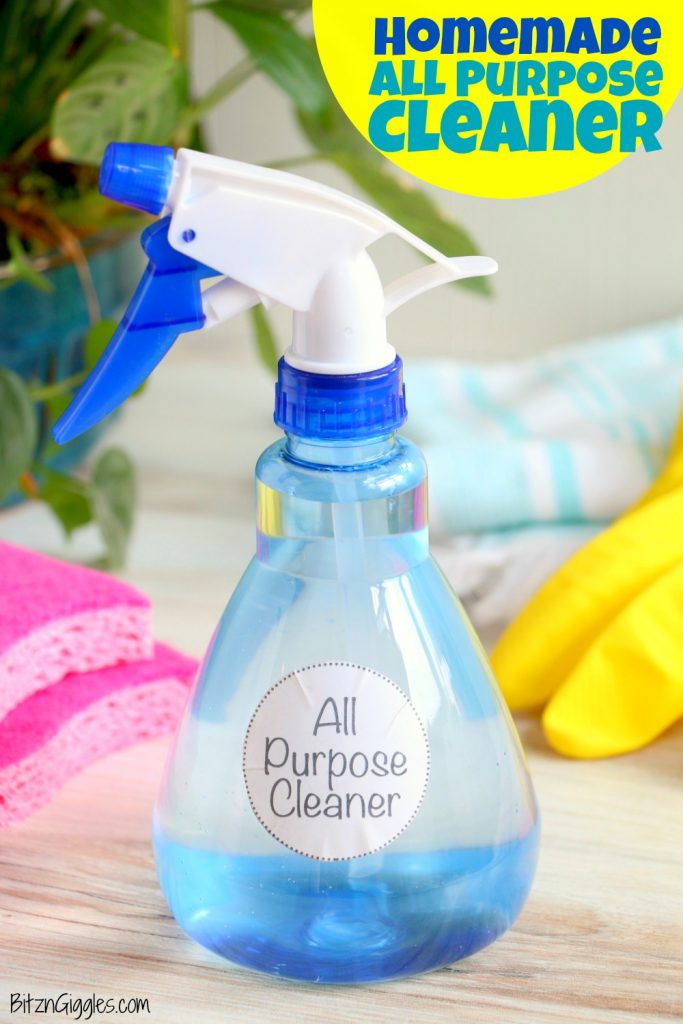
Homemade All Purpose Cleaner - Effectively disinfect and kill viruses and bacteria with this two-ingredient hard surface cleaner you can make right at home.
Want to Save This Recipe?
This post may include affiliate links. Please see my disclosure.
This disinfectant recipe follows recommendations and ratios set forth by the Centers for Disease Control and Prevention (CDC). You must use a liquid bleach containing 6-7% sodium hypochlorite when following the recipe in this post.
I believe we're into the 5th week of our COVID-19 quarantine here in Wisconsin. From the beginning, it's been difficult to get my hands on any disinfecting products in the stores. I still check the aisles during my grocery store runs but haven't been lucky enough to come across any yet.
So. . .I've resorted to making what I can at home. I've made my own hand sanitizer, disinfecting wipes, air freshener, dusting spray, window cleaner, and the list goes on.
Today, we're making a homemade hard-surface all purpose cleaner that follows CDC recommendations and uses only two ingredients: bleach and water. Let's get started!
HOW TO MAKE HOMEMADE ALL PURPOSE CLEANER
To make your own all purpose cleaner, you'll need:
- 1 cup cool tap water
- 1 teaspoon liquid bleach (containing 6-7% sodium hypochlorite)
- Small funnel
- Spray bottle
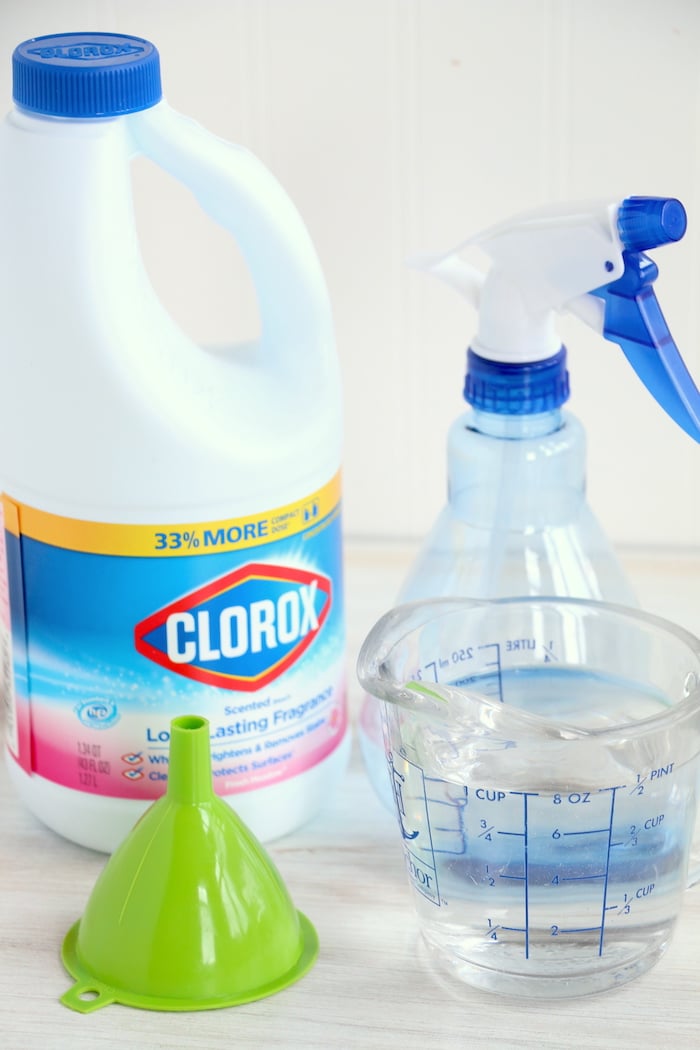
IMPORTANT FACTS ABOUT USING BLEACH TO DISINFECT
- Sodium hypochlorite is the active ingredient that makes bleach a strong and effective disinfectant. Before 2021, "regular" bleach was really the ONLY kind you wanted for disinfecting surfaces. Scented or splash-less bleach, while popular for laundering, was not registered with the EPA before that time as a disinfectant.
In January 2021, Clorox introduced a revised formula for its splash-less bleach, which is now EPA-registered as a disinfectant.
- Bleach DOES expire. If you're using a bottle of bleach that's been sitting in your cupboard or on your shelf for awhile, make sure it's not expired. How do you read the expiration date on a bleach bottle? This article is very helpful!
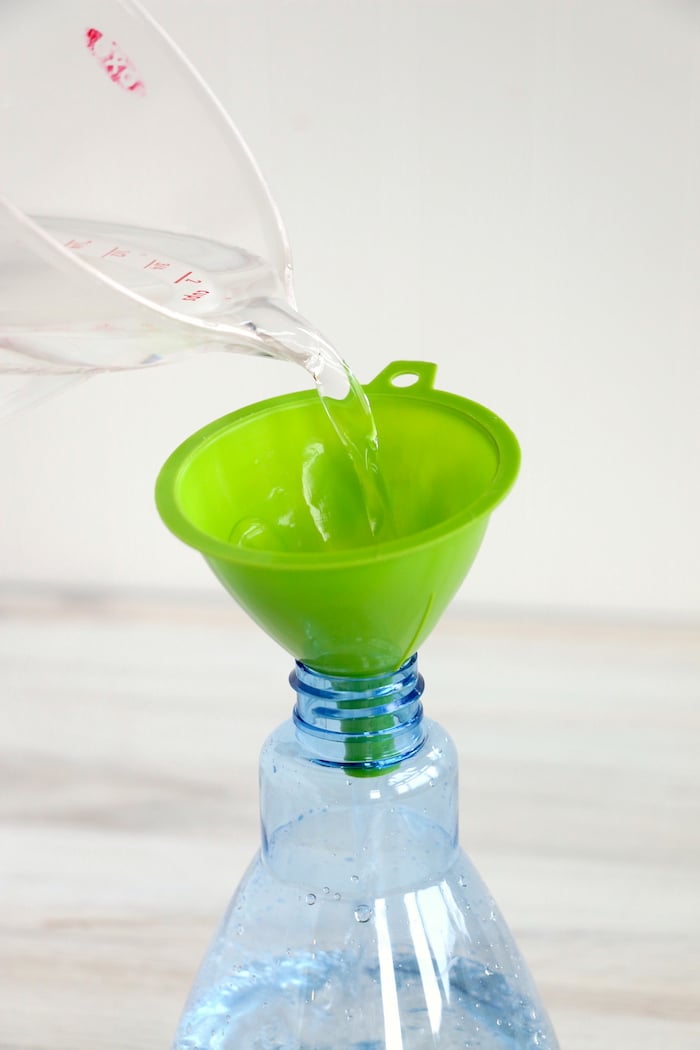
Begin making your solution by pouring one cup of water into a spray bottle.
Add in one teaspoon of bleach.
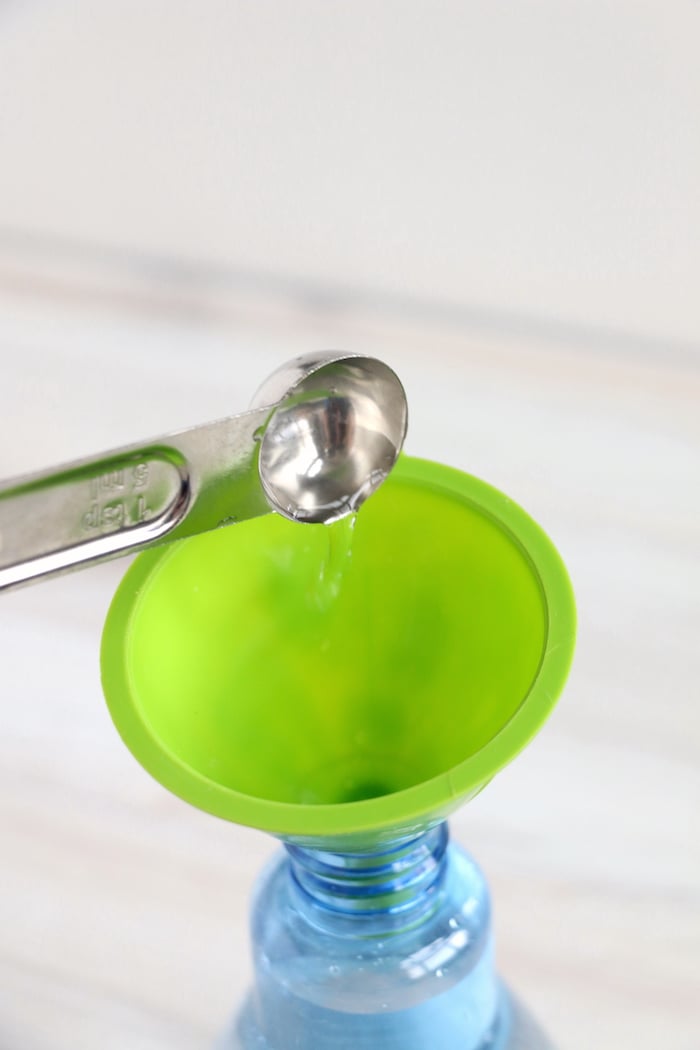
And it's ready to use. Make sure you read through the rest of the post to inform yourself on some additional important tips on the use of bleach when cleaning!
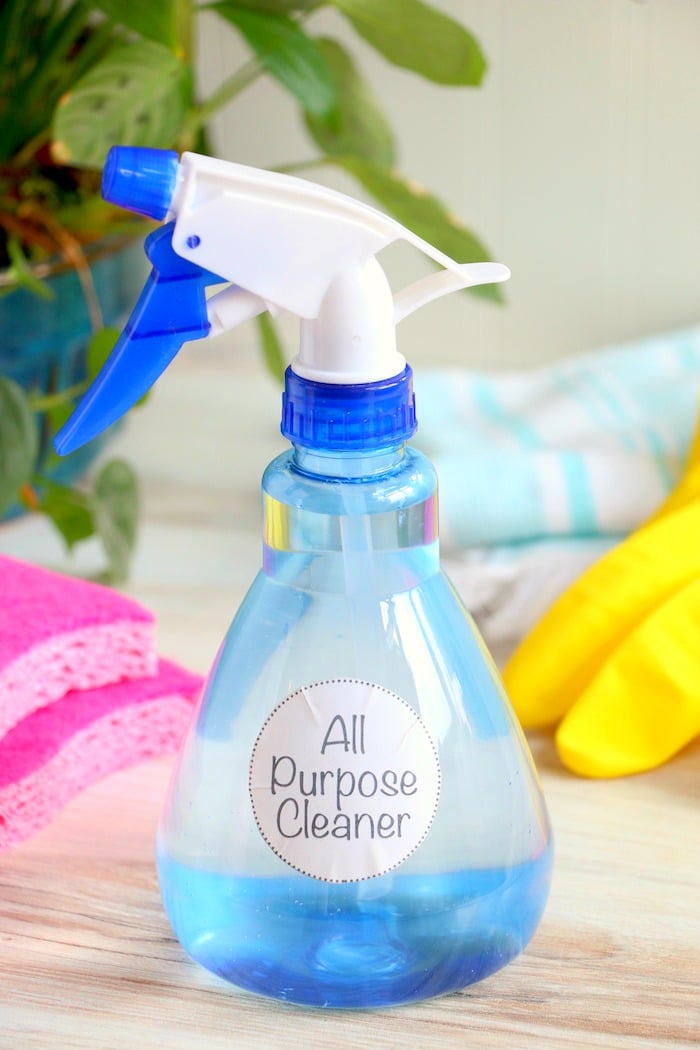
WILL BLEACH KILL CORONAVIRUS?
Yes, bleach is effective against coronaviruses when properly diluted.
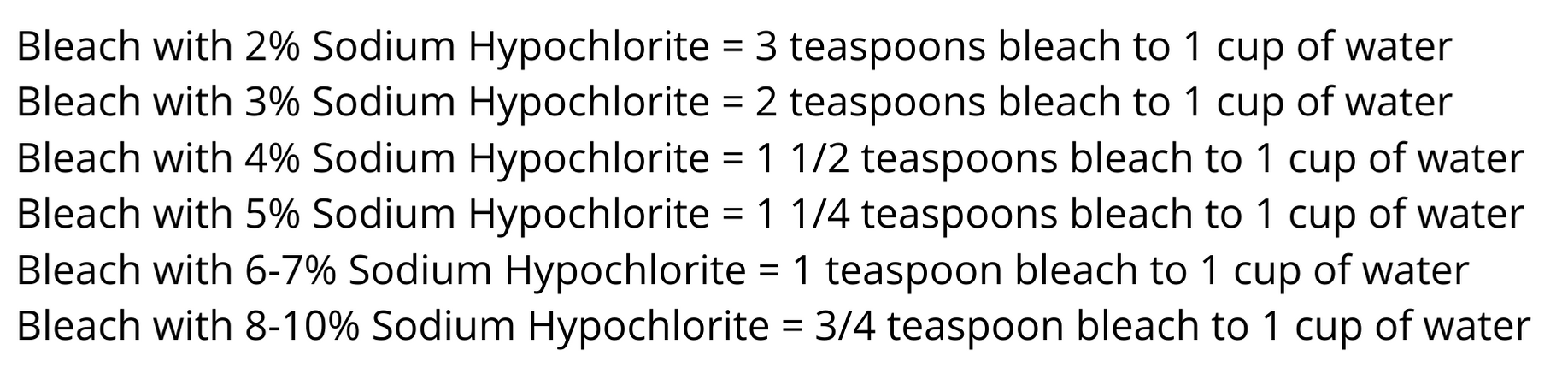
DO I NEED TO ADJUST THE RECIPE IF I USE BLEACH THAT CONTAINS A LOWER OR HIGHER PERCENTAGE OF SODIUM HYPOCHLORITE?
Yes, you will. Here's a quick chart to reference:
If you're looking to make a larger batch of this all purpose cleaner, the CDC recommends the following ratios:
- ⅓ cup bleach per 1 gallon of water or
- 4 teaspoons bleach per 1 quart of water
WHAT SURFACES SHOULD I USE THIS CLEANER ON?
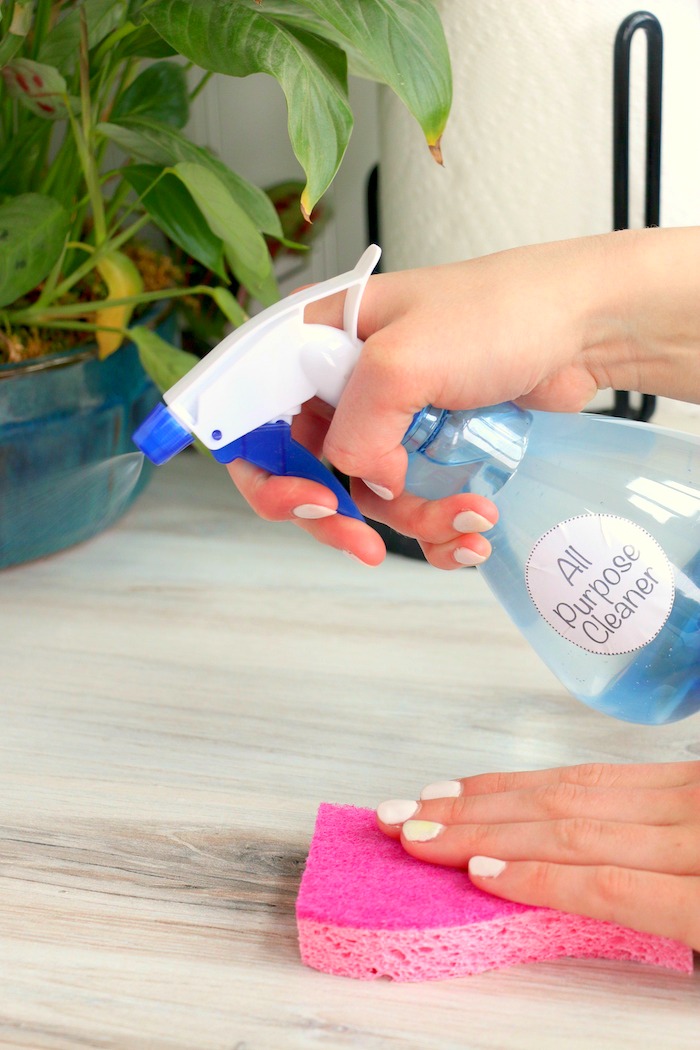
This solution can be used for disinfecting hard, non-porous surfaces like door handles, showers, sinks, showers, bathtubs, vinyl, floors and countertops (with limited use).
Concrete and granite countertops are usually protected with sealants. Bleach can eventually eat through the sealant over time, so when using the solution, rinse the surface with water after disinfecting to prevent damage or discoloration.
Avoid using the cleaner on porous surfaces like wood, fabric, butcher block countertops and cutting boards. It's also not made for use on stainless steel appliances or metal pots and pans.
HOW LONG CAN I STORE THE CLEANING SOLUTION?
Once mixed, don't keep the solution for longer than a day because the bleach will lose potency and can eat through or begin to disintegrate certain plastic containers.
Because you should produce a fresh batch daily, I would recommend making the solution as instructed below, starting with just 1 cup of water and 1 teaspoon of bleach - unless you're cleaning A LOT of surfaces. Then double it and make more if you run out after that.
LOOKING FOR MORE HOMEMADE CLEANING & SANITIZING SOLUTIONS?
- Disinfecting Wipes
- Magic Erasers
- Hand Sanitizer
- Miracle Carpet Cleaner
- Dishwasher Detergent
- Heavy Duty Window Cleaner

Homemade All Purpose Cleaner
Equipment
- Small funnel
- Spray bottle
Materials
- 1 cup cool tap water
- 1 teaspoon bleach containing 6-7% sodium hypochlorite
Instructions
- Using a funnel, pour water into the spray bottle.
- Add the bleach into the bottle.
- Apply the solution to hard surfaces such as doorknobs, countertops, sinks, showers, floors, etc.
- Allow the solution to sit on surface for at least one minute before wiping down with a sponge or paper toweling.